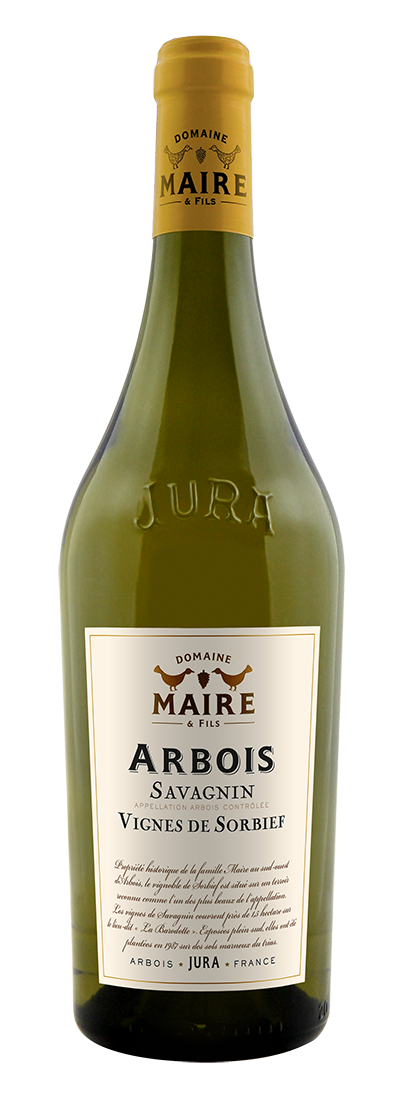
ARBOIS SAVAGNIN VIGNES DE SORBIEF 2024

click on one of the vintages below for further information
Several generations have been necessary to patiently built one of the largest and greatest estates in the area, focused on key appellations such as Château-Chalon, l’Étoile and Arbois. The Domaine MAIRE & Fils covers nowadays around 240 hectares of vines producing all the area grapes varieties.
With its beautiful light gold colour and green highlights, this Savagnin surprises with its mineral, floral and fruity notes (white fruits and exotic notes). On the palate, the combination of a unique terroir and ageing in oak barrels gives us a powerful, complex wine that offers a fine balance between lemony, mineral notes, aromas of white flowers and substance for a long, pleasant finish.
The Arbois AOC is the oldest and largest of the Jura's four geographic AOCs. In particular, it was France's first AOC (created in 1937).
Its name originates in the Celtic words "ar" and "bois" that would mean "fertile land".
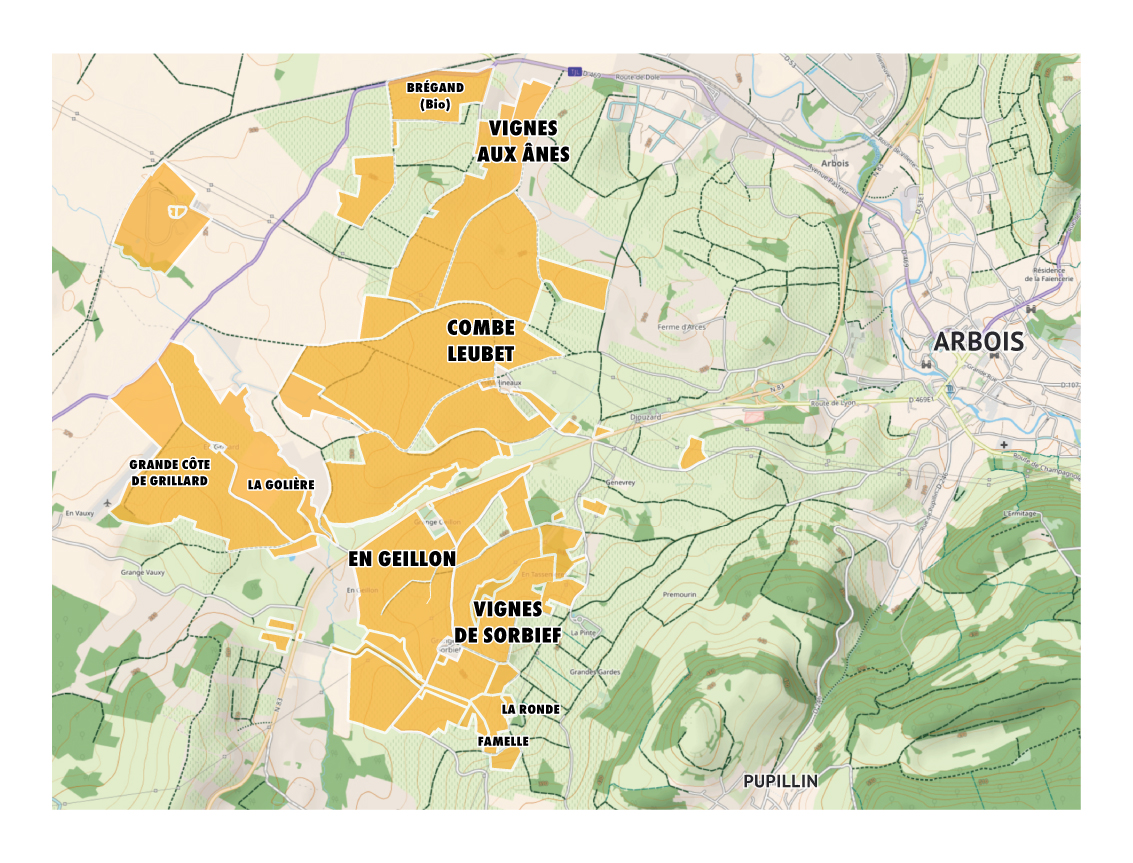
Particularly adapted to this late and demanding grape variety, the plot called “La Barodotte” is located in the west of the Domaine and to the southwest of the Arbois village on a lovely hill overlooking the famous “Route des vins du Jura” (the Jura wine road) RN 83:
- Surface: 1,5 Ha.
- Full South exposure.
- Average age of vines : 38 years (1987).
- Triassic marls sols.
The work in the vines, is based on the respect of the nature and the soil. We practice soil reassembly to aerate the lands subjected to settlement due to moisture, and grass with plants. Such as clover, which, by competing on the vine, can modulate its mineral and water supply and control its vigour and yield.
The Guyot double size is necessary to better control the vine performance.
The year 2024 will remain etched in our memories. The weather conditions were extreme: temperatures nearing 40°C, periods of intense drought, and episodes of heavy rain and hail. Our vineyards were severely tested, and we experienced a significant drop in yields, losing between 60% and 70% of our harvest. Despite an early start to the growing season in March, we were able to begin the harvest at the usual time, around late September. The harvest spanned 3 to 4 weeks, allowing us to pick the grapes at their optimal ripeness. The first tastings are promising: our wines are well-balanced, with smooth notes and generous aromas. The whites stand out for their freshness and intensity, thanks to high concentrations of thiols. The reds offer intense fruitiness and a delicate texture, with acidity levels that align with our region’s expectations. Despite the challenges posed by the climate, we remain optimistic. This vintage, although marked by reduced production, could very well turn out to be exceptional. We look forward to seeing how these wines will evolve over time.
Le Guide Hachette des Vins 2027 -
2 stars - September 2026
International Wine & Spirit Competition - Bronze Medal - May 2026
WINE SPECTATOR - Mention - August 2026
International Wine & Spirit Competition - Bronze Medal - May 2026
WINE SPECTATOR - Mention - August 2026